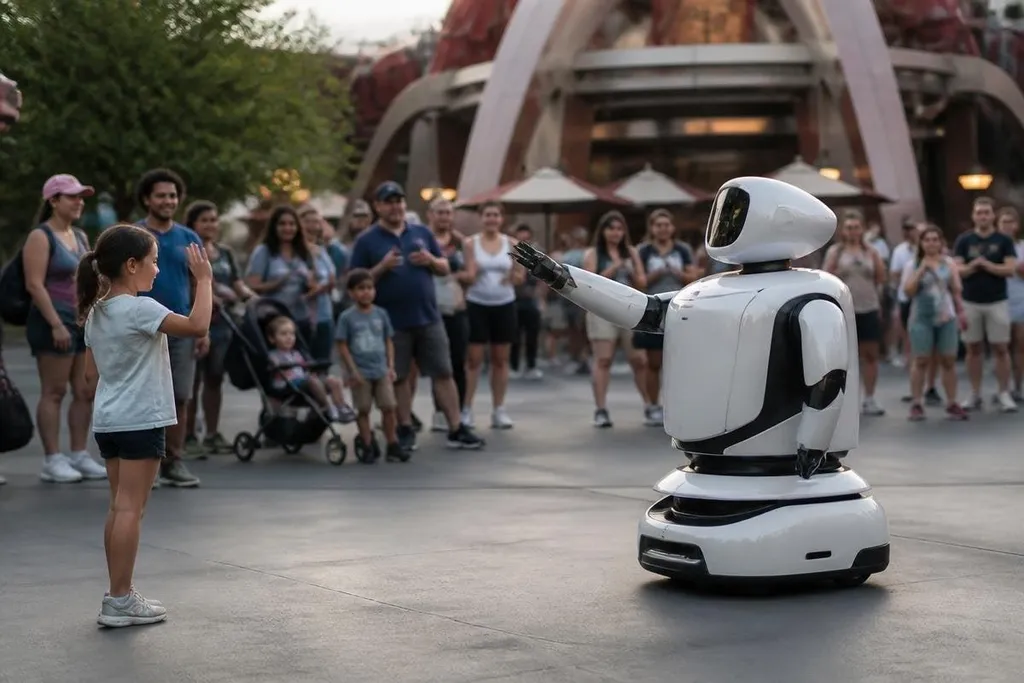
A theme-park robot has to move near people, react to changing conditions, and repeat the same action for hours. AI can help with those tasks by reading camera data, choosing movements, and spotting when a routine needs to stop.
The change matters most in places where a fixed script breaks down. A greeting robot, a carrying robot, or a stage performer still needs clear limits, trained staff, and a way to stop safely.
Quick read
- Cameras and microphones give robots more information about nearby people and objects.
- Machine-learning models can adjust timing, motion, and speech within set limits.
- AI does not remove the need for staff, safety checks, or human control.
What AI changes on the park floor
Older robots can follow a fixed sequence: raise an arm, turn toward a marked spot, play a recorded line, then return to the start position. That works when the space and timing stay the same. Theme parks rarely offer such a clean setup.
AI lets a robot process sensor data as it works. A camera can detect a person, an object, or an open path. A microphone can pick out speech or a loud warning. The robot's control software can then select from approved actions instead of running one script from start to finish.
That choice still needs limits. The system might be allowed to wave, turn its head, answer a short question, or pause a show. It should not decide on its own to enter a staff area, touch a guest, or continue moving after a sensor reports danger.
The useful parts are small and specific
The biggest gains may come from timing rather than human-like conversation. A robot can wait for a guest to finish speaking, turn toward the person who is talking, or change the length of a pause during a performance.
Those details make a scripted interaction feel less rigid without giving the robot open control. Computer vision can also help with routine checks by comparing the current scene with an approved layout.
The system may flag a prop that has fallen, a barrier that has moved, or a person standing in a restricted area. Staff still need to confirm the alert before changing park operations.
Speech systems bring a similar trade-off. Speech software may answer questions about show times or nearby facilities when its software has approved information. Questions outside that set need a clear fallback, such as calling a staff member or directing the guest to a display.
That fallback rule also needs a record of the robot, approved information, and staff handoff. Theme park robot reporting can place those details beside the system’s AI claims before the next section looks at its limits.
Where the limits sit
Theme parks create difficult test conditions. Lighting changes during the day, music can cover speech, and crowds move in ways a training set may not represent. A robot that works well in a quiet test area may react more slowly when several people speak at once.
There is also a maintenance cost. Cameras need clean views, sensors can shift after a bump, and software updates can change how a robot reads the same scene. Staff need records of those changes, along with a way to return to a known working version.
Privacy needs attention too. A camera used to detect a clear path may also record faces. Park operators need to state what the system collects, how long it keeps the data, and who can access it. The answer cannot hide inside a technical manual.
AI can make a robot more flexible, but flexibility adds more cases to test. I'd judge a theme-park robot by its safe fallback actions before its most polished performance.
A practical buying checklist
Use these points before approving an AI robot for guest areas:
- Define its job: Write down the actions the robot may take and the places it may enter.
- Test crowd noise: Check speech and stop behavior with music, several voices, and moving groups.
- Set human control: Give staff a visible stop button and a clear way to take over.
- Record failures: Log missed detections, false alarms, sensor faults, and software changes.
- Check data rules: State what cameras and microphones collect, where records go, and when they are deleted.
A useful system will have a narrow job, clear limits, and records that staff can inspect after a failure. The open question is how many theme parks will publish those test results before putting AI robots in front of guests.